




Overview
Last time, we explored SPHERES, a set of seasonal story directions inspired by the emotional environments shaping how people feel and buy today.
We looked at how synthetic research can clarify early creative decisions before moodboards are even built. When we tested these concepts with consumers, one sub-theme rose to the top, The Biosphere, a direction that felt warm, grounded, human, and connected (If you missed that breakdown, you can read Part 1 here for the full story
But landing on the story is just the start.
Once the direction is clear, the real work begins, turning that story into product without losing what made it meaningful.
This is where most seasons drift.
Not because teams lack talent, but because the iteration process is expensive, slow, and full of friction.
Let’s Be Honest About How Design Usually Works
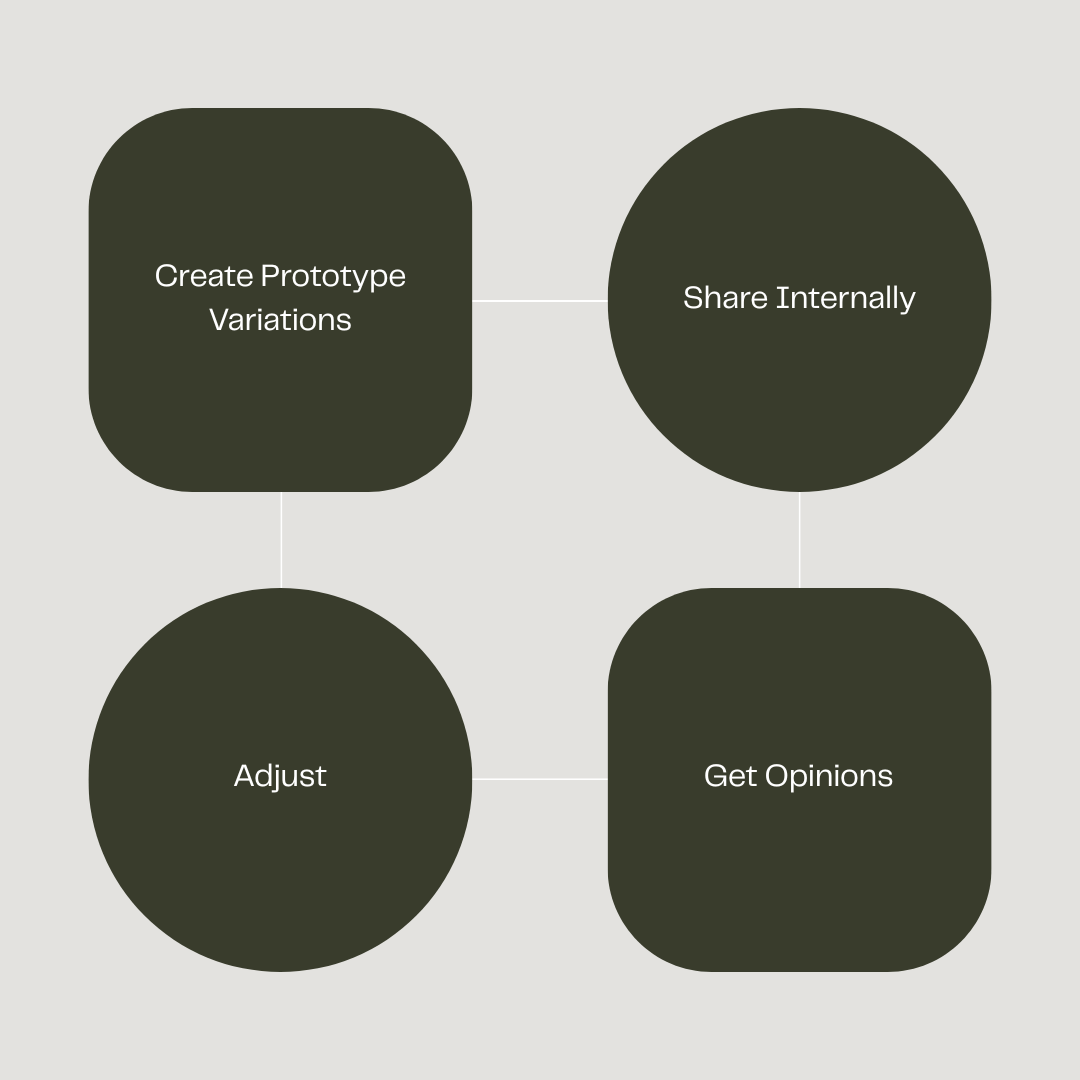
You sketch or prototype a few variations. You share internally. You get opinions. You adjust. You share again. You adjust again.
And if you want consumer feedback?
You now need:
- A scoped research project
- A budget
- A two-week feedback window on the calendar
Which means you can really only test once... maybe twice. So the team tries to “get it right” early, and seasons often lock without ever hearing from consumers.
What Happens When Iteration Isn’t Expensive
With MakerLabs, design iteration becomes lightweight.
You don’t scope a new test every time you refine something. You just upload new variations and test again. And again.
Same audience. Same Digital Twins. Same context. No new project. No new cost. No waiting.
The loop becomes simple: Design → Test → Refine → Repeat until it feels right.
.png)
This changes everything.
Design gets more experimental, not less.
Merch gets more confident, not more cautious.
Teams move faster, not slower.
Bringing The Biosphere to Life
Once we knew The Biosphere was the right seasonal hero, the design team began translating it into product.
They sketched. They mocked up materials. They explored silhouettes and color tensions. They built what The Biosphere felt like.
But a strong story doesn’t guarantee that consumers will love the product that expresses it.
So we tested the first round of designs with our Biosphere-aligned consumer audiences in MakerLabs, the same consumers who had already connected with the story emotionally.
Here’s what we learned:
- The warmer neutrals carried more of that “grounded warmth” than the cooler tones.
- The heavier knits felt more human and tactile, but only in certain markets.
- A smaller, quieter logo actually strengthened the Biosphere feeling.
Now in a traditional research world, that would be the end of consumer testing. You don’t have enough budget or time to re-do the designs and test again. Impossible.
But with MakerLabs, that’s exactly what we'll do.
We refined the designs. Tested again. Refined again. Tested again.
All without scoping a new project, paying another invoice, or slowing the season down.
The Real Value
Iteration isn’t about testing more, it’s about removing the cost and friction that normally limit how much you can learn.
It gives teams space to explore, refine, and make better work without losing time or headspace.
When iteration is easy, the product ends up tighter.
The story shows up in the details.
The season feels intentional.
And the team stops second-guessing.
If You’re Moving From Story to Design Right Now
Now is the time to see how synthetic research can work inside your process. MakerLabs helps brands test product variations, explore new ideas, and refine designs faster, all without disrupting timelines or adding cost.
Learn more about MakerLabs and see how iterative testing can unlock clarity in your next design stage.
Key Takeaways
Methodology
Last time, we explored SPHERES, a set of seasonal story directions inspired by the emotional environments shaping how people feel and buy today.
We looked at how synthetic research can clarify early creative decisions before moodboards are even built. When we tested these concepts with consumers, one sub-theme rose to the top, The Biosphere, a direction that felt warm, grounded, human, and connected (If you missed that breakdown, you can read Part 1 here for the full story
But landing on the story is just the start.
Once the direction is clear, the real work begins, turning that story into product without losing what made it meaningful.
This is where most seasons drift.
Not because teams lack talent, but because the iteration process is expensive, slow, and full of friction.
Let’s Be Honest About How Design Usually Works
You sketch or prototype a few variations. You share internally. You get opinions. You adjust. You share again. You adjust again.
And if you want consumer feedback?
You now need:
- A scoped research project
- A budget
- A two-week feedback window on the calendar
Which means you can really only test once... maybe twice. So the team tries to “get it right” early, and seasons often lock without ever hearing from consumers.
What Happens When Iteration Isn’t Expensive
With MakerLabs, design iteration becomes lightweight.
You don’t scope a new test every time you refine something. You just upload new variations and test again. And again.
Same audience. Same Digital Twins. Same context. No new project. No new cost. No waiting.
The loop becomes simple: Design → Test → Refine → Repeat until it feels right.
This changes everything.
Design gets more experimental, not less.
Merch gets more confident, not more cautious.
Teams move faster, not slower.
Bringing The Biosphere to Life
Once we knew The Biosphere was the right seasonal hero, the design team began translating it into product.
They sketched. They mocked up materials. They explored silhouettes and color tensions. They built what The Biosphere felt like.
But a strong story doesn’t guarantee that consumers will love the product that expresses it.
So we tested the first round of designs with our Biosphere-aligned consumer audiences in MakerLabs, the same consumers who had already connected with the story emotionally.
Here’s what we learned:
- The warmer neutrals carried more of that “grounded warmth” than the cooler tones.
- The heavier knits felt more human and tactile, but only in certain markets.
- A smaller, quieter logo actually strengthened the Biosphere feeling.
Now in a traditional research world, that would be the end of consumer testing. You don’t have enough budget or time to re-do the designs and test again. Impossible.
But with MakerLabs, that’s exactly what we'll do.
We refined the designs. Tested again. Refined again. Tested again.
All without scoping a new project, paying another invoice, or slowing the season down.
The Real Value
Iteration isn’t about testing more, it’s about removing the cost and friction that normally limit how much you can learn.
It gives teams space to explore, refine, and make better work without losing time or headspace.
When iteration is easy, the product ends up tighter.
The story shows up in the details.
The season feels intentional.
And the team stops second-guessing.
If You’re Moving From Story to Design Right Now
Now is the time to see how synthetic research can work inside your process. MakerLabs helps brands test product variations, explore new ideas, and refine designs faster, all without disrupting timelines or adding cost.
Learn more about MakerLabs and see how iterative testing can unlock clarity in your next design stage.


.png)
From the Founders Newsletter
A bi-weekly note from Dan and Matt.
Sign up to learn more on consumer insights, synthetic research, and the future of retail, with takeaways you can put to work today.


